When planning a structured cabling installation — whether for a new office, a data center, or a multi-building campus — understanding the applicable standards is non-negotiable. Standards compliance isn't just a checkbox: it determines whether your infrastructure supports the speeds you need, qualifies for manufacturer warranties, and passes certification testing.
This guide breaks down the major structured cabling standards, what they require, and how to ensure your installation is built to last.
What Is Structured Cabling?
Structured cabling is a standardized approach to building telecommunications and data network infrastructure. Rather than running ad-hoc cables between specific devices, structured cabling creates a hierarchical, modular system with:
- Entrance facilities — where external cables enter the building
- Main distribution frames (MDFs) — the central hub of the cabling system
- Intermediate distribution frames (IDFs) — floor-level or zone-level distribution points
- Horizontal cabling — runs from IDFs to individual work area outlets
- Work area components — patch cords, wall plates, and faceplates at the endpoint
This architecture makes moves, adds, and changes simple — and ensures that any device can connect to any network port with predictable performance.
The Major Structured Cabling Standards
TIA-568 (North American Standard)
The TIA/EIA-568 standard, published by the Telecommunications Industry Association, is the primary structured cabling standard used in the United States. The current active versions include:
- TIA-568.0-D — Generic Telecommunications Cabling for Customer Premises
- TIA-568.1-D — Commercial Building Telecommunications Infrastructure
- TIA-568.2-D — Balanced Twisted-Pair Telecommunications Cabling and Components
- TIA-568.3-D — Optical Fiber Cabling and Components
TIA-568 defines everything from minimum cable bend radius and pull tension limits to connector pin assignments (the familiar T568A and T568B wiring standards) and horizontal cabling distance limits (90 meters for permanent links).
ISO/IEC 11801 (International Standard)
ISO/IEC 11801 is the international equivalent of TIA-568, used widely in Europe and globally. It defines cabling classes (Class D through Class FA) that correspond roughly to the TIA categories:
| TIA Category | ISO/IEC Class | Max Speed | Max Frequency |
|---|---|---|---|
| Cat5e | Class D | 1 Gbps | 100 MHz |
| Cat6 | Class E | 1 Gbps | 250 MHz |
| Cat6A | Class EA | 10 Gbps | 500 MHz |
| Cat8 | Class I/II | 25/40 Gbps | 2000 MHz |
BICSI Standards
BICSI (Building Industry Consulting Service International) publishes a range of supplementary guidelines that complement TIA and ISO standards:
- BICSI 002 — Data Center Design and Implementation
- BICSI 005 — Electronic Safety and Security
- TDMM (Telecommunications Distribution Methods Manual) — The comprehensive design reference
BICSI certification (RCDD, INSTEC, TECH) is widely recognized as a mark of professional competency in cabling design and installation.
Cable Categories: Which One Do You Need?
Cat5e — The Minimum for New Installations
Cat5e (Category 5 Enhanced) supports Gigabit Ethernet at distances up to 100 meters. While still functional, Cat5e is not recommended for new installations — it leaves no headroom for future 2.5G or multi-gigabit applications.
Cat6 — The Current Standard for Most Commercial Deployments
Cat6 supports Gigabit Ethernet at 100m and 10 Gigabit at distances up to 55 meters. It's the most commonly specified cable for new office and commercial buildouts today. The improved signal-to-noise ratio compared to Cat5e provides better performance and more reliable connections.
Cat6A — The Right Choice for High-Performance Applications
Cat6A (Augmented Category 6) supports 10 Gigabit Ethernet at the full 100-meter horizontal run distance. It's recommended for:
- Data centers and server rooms
- PoE++ applications (up to 90W) — essential for high-power AV equipment, smart lighting, and advanced IP cameras
- Healthcare environments where 10GbE to the desktop is increasingly required
- Any application where the cabling infrastructure should remain viable for 10+ years
Fiber Optic — For Backbone and Long-Distance Runs
Fiber is the standard for backbone cabling (MDF to IDF), long horizontal runs exceeding 100m, and any application requiring immunity from electromagnetic interference.
Single-mode fiber (SMF) — for long-distance runs (campus interconnects, building-to-building) Multi-mode fiber (MMF) — for shorter backbone runs within a building (OM3, OM4, OM5)
FLUKE Certification Testing: Why It Matters
Installation isn't complete without FLUKE certification testing — the process of electronically verifying that every cable run meets the performance specifications of its rated category.
FLUKE testing measures:
- Wire map — correct pinout, no shorts, opens, or crossed pairs
- Length — confirms the run is within the 90m permanent link limit
- Insertion loss — signal attenuation along the cable
- NEXT/FEXT — near-end and far-end crosstalk between pairs
- Return loss — signal reflections caused by impedance mismatches
- PS NEXT / PS ELFEXT — power sum crosstalk measurements
Every run that passes receives a test report. These reports are the documented proof that your installation was performed correctly and to standard — critical for manufacturer warranties and future troubleshooting.
NJTECHLAND provides FLUKE certification testing on every structured cabling installation, delivering complete test reports as part of the project deliverable.
Planning Your Structured Cabling Installation
Step 1: Conduct a Site Survey
Before any cable is pulled, a thorough site survey documents the existing infrastructure, identifies pathways, confirms conduit availability, and determines the optimal MDF/IDF placement.
Step 2: Develop a Cabling Design
The design specifies cable category, pathway routing, MDF/IDF locations, horizontal run counts per zone, and any special requirements (plenum-rated cable, conduit, cable tray).
Step 3: Pull and Terminate Cable
Certified technicians pull cable through walls, ceilings, and conduit — maintaining proper bend radius, separation from EMI sources, and pair twist integrity all the way to the termination.
Step 4: Terminate and Label
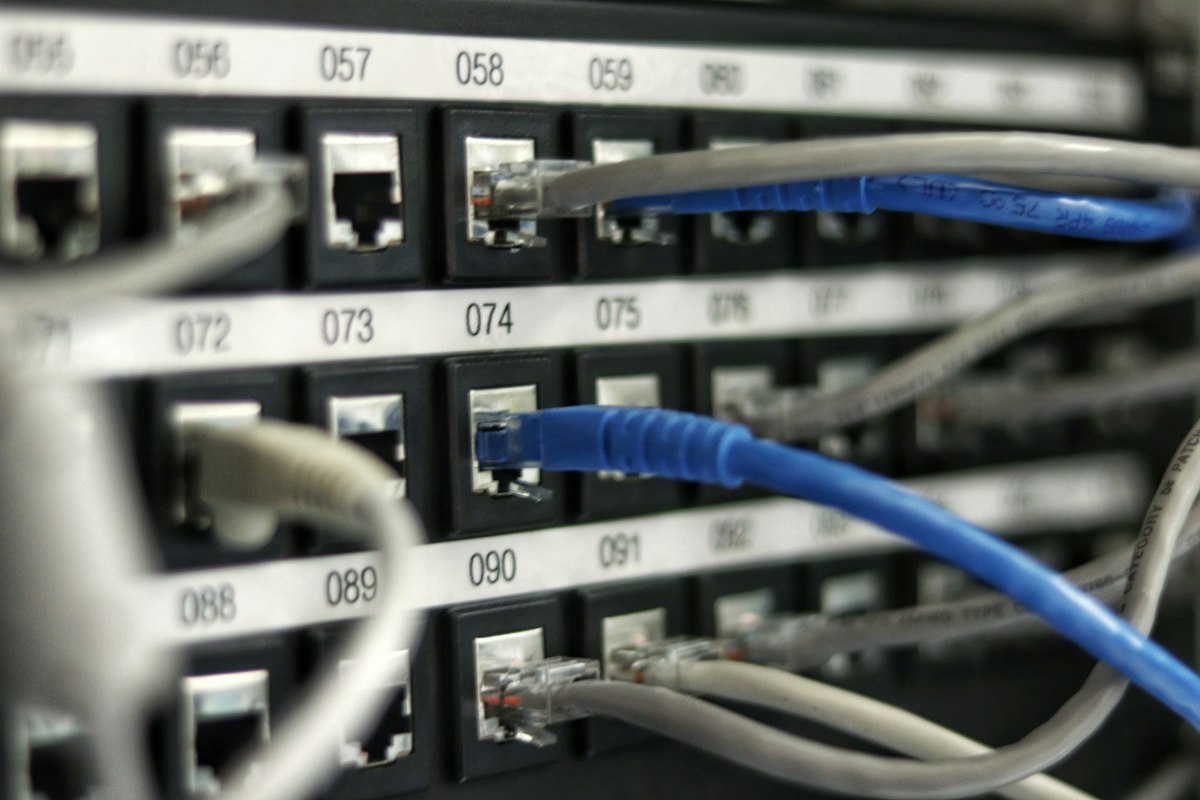
Patch panels and wall plates are terminated, and every run is labeled at both ends according to a consistent labeling scheme. Proper labeling is one of the most overlooked aspects of quality cabling work.
Step 5: FLUKE Test and Document
Every run is tested. All results are compiled into a final certification report that becomes part of the project documentation package.
Common Structured Cabling Mistakes to Avoid
- Using Cat5e for new construction — always specify Cat6 minimum, Cat6A for high-performance zones
- Exceeding the 90-meter permanent link limit — longer runs fail certification and cause intermittent issues
- Improper pair untwisting at terminations — untwisting more than 13mm (0.5") degrades NEXT performance
- Poor cable management — bent cables, overly tight bundles, and staple damage cause real performance degradation
- Skipping FLUKE testing — without certification, you have no proof the installation meets spec
- No labeling convention — an unlabeled cabling plant becomes a troubleshooting nightmare within months
NJTECHLAND Structured Cabling Services
NJTECHLAND provides certified structured cabling installation for commercial, enterprise, healthcare, retail, and data center environments across all 50 states. Every installation includes:
- TIA-568 compliant design and installation
- Cat5e, Cat6, Cat6A, and fiber optic cabling
- FLUKE certification testing with full documentation
- Proper cable management, labeling, and pathway organization
- MDF/IDF buildouts with patch panel termination
We serve clients in New Jersey, New York, Texas, California, Florida, and nationwide. Contact NJTECHLAND for a free structured cabling assessment.