
Your ISP just installed a brand-new high-speed circuit for your business. Great news, right? There's just one problem: the line terminates in a utility closet on the first floor, and your server room is three floors up. Now what?
This is exactly where a DMARC extension comes into play. It's one of the most overlooked yet critical components of business IT infrastructure. Without it, that shiny new internet circuit is essentially useless.
Let's break down what a DMARC extension actually is, why your business probably needs one, and how to do it the right way.
What Exactly is a DMARC Extension?
First, let's clear up the terminology. DMARC stands for Demarcation Point: sometimes spelled "demarc" in the industry. This is the physical location where your Internet Service Provider's (ISP) responsibility ends and your responsibility as the customer begins.
Think of it as a property line. The ISP brings their service: whether it's fiber, coax, or copper: to the edge of your building. They install a small device or termination point, shake your hand, and say, "Good luck from here."
The problem? That termination point is almost never where you actually need the connection.
A DMARC extension (also called a circuit extension) is the process of extending that service from the ISP's entry point to your actual network equipment: typically your server room, network closet, or data center.
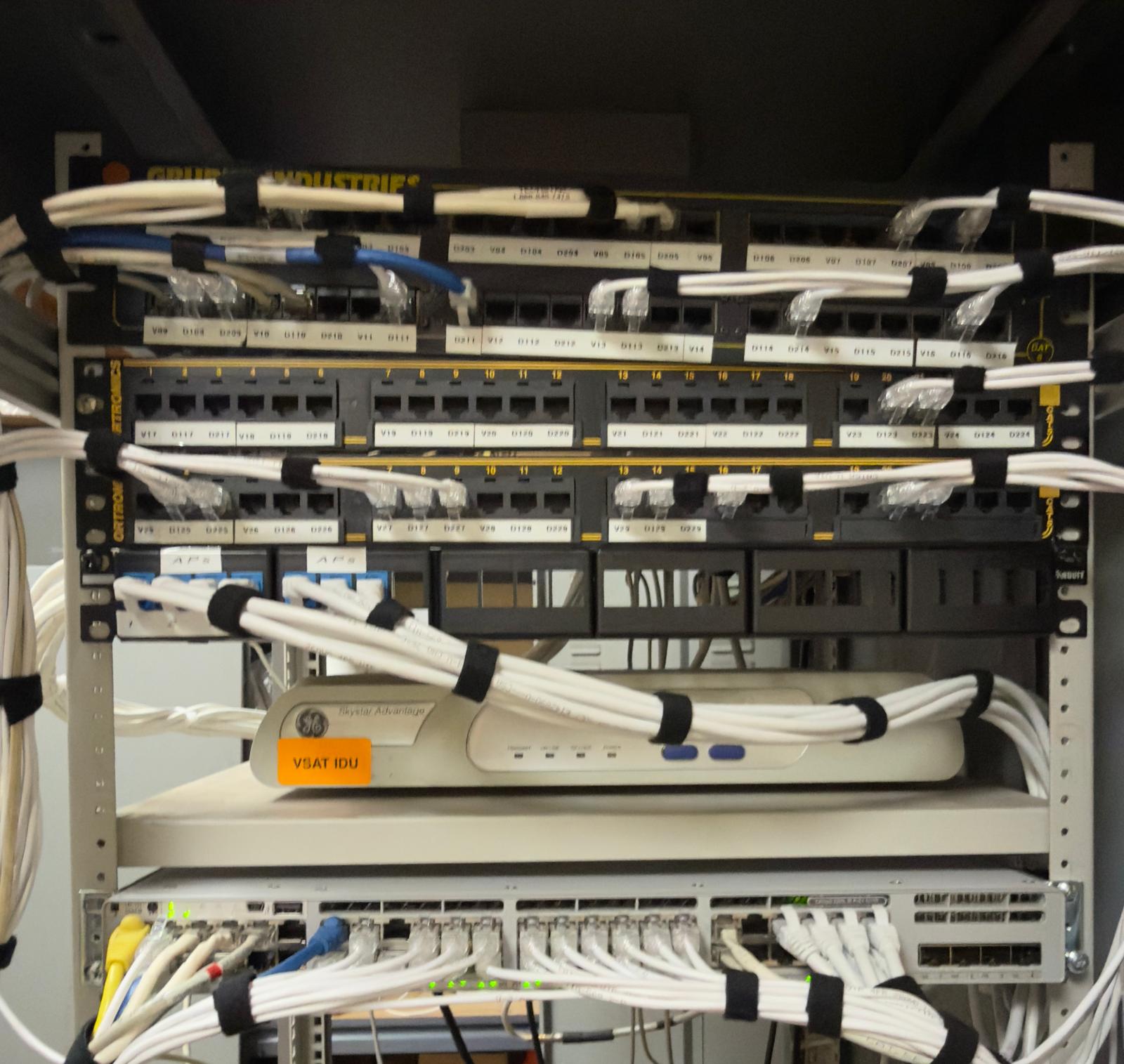
Why Do Businesses Need DMARC Extensions?
Here's the reality of commercial buildings: ISPs don't care where your IT equipment lives. They care about getting their line into the building as quickly and cheaply as possible. That usually means terminating in:
- A basement utility room
- A first-floor telecommunications closet
- An exterior demarc box on the side of the building
Meanwhile, your server room might be on the fourth floor. Your point-of-sale systems might be spread across an entire retail floor. Your security DVR might be in a back office 200 feet away.
Without a proper circuit extension, you're stuck with one of two bad options:
- Running a ridiculously long patch cable (which looks unprofessional and creates signal degradation)
- Moving your equipment to the demarc location (which is rarely practical or secure)
A professionally installed DMARC extension solves this by creating a permanent, high-quality cable pathway from the ISP's termination point directly to your equipment.
The Real-World Scenarios
Multi-location retail chains deal with this constantly. Each store has a different building layout, and the ISP circuit might land anywhere. Without a standardized DMARC extension process, you end up with inconsistent network performance across locations.
Banks and financial institutions face even stricter requirements. The demarc might be in a public-accessible area, but regulations require network equipment to be in secure, access-controlled rooms. A circuit extension bridges that gap while maintaining compliance.
Warehouses and distribution centers present unique challenges due to sheer distance. A demarc on one end of a 100,000-square-foot facility means you might need a 500-foot run to reach your operations center.
The Technical Side: Cat6 vs. Fiber
Here's where many businesses get it wrong. They extend their circuit with whatever cable is cheapest or most convenient. This is a costly mistake.
The cable you use for your DMARC extension directly impacts:
- Signal quality (latency, packet loss)
- Maximum bandwidth (can your cable handle gigabit speeds?)
- Future scalability (will this work when you upgrade to 10Gbps?)
- Reliability (will it hold up in harsh environments?)
Cat6/Cat6A Copper Cabling
For most circuit extensions under 300 feet, Cat6 or Cat6A copper cabling is the standard choice. It supports speeds up to 10Gbps (for Cat6A) and is cost-effective for typical office environments.
Best for:
- Office buildings with server rooms within 300 feet of the demarc
- Retail locations with standard network requirements
- Environments with minimal electromagnetic interference
Fiber Optic Cabling
For longer runs or high-performance requirements, single-mode or multi-mode fiber is the superior choice. Fiber doesn't suffer from signal degradation over distance, is immune to electromagnetic interference, and supports virtually unlimited bandwidth.
Best for:
- Warehouse and industrial environments
- Runs exceeding 300 feet
- Mission-critical applications requiring maximum reliability
- Future-proofing for 10Gbps, 40Gbps, or 100Gbps circuits
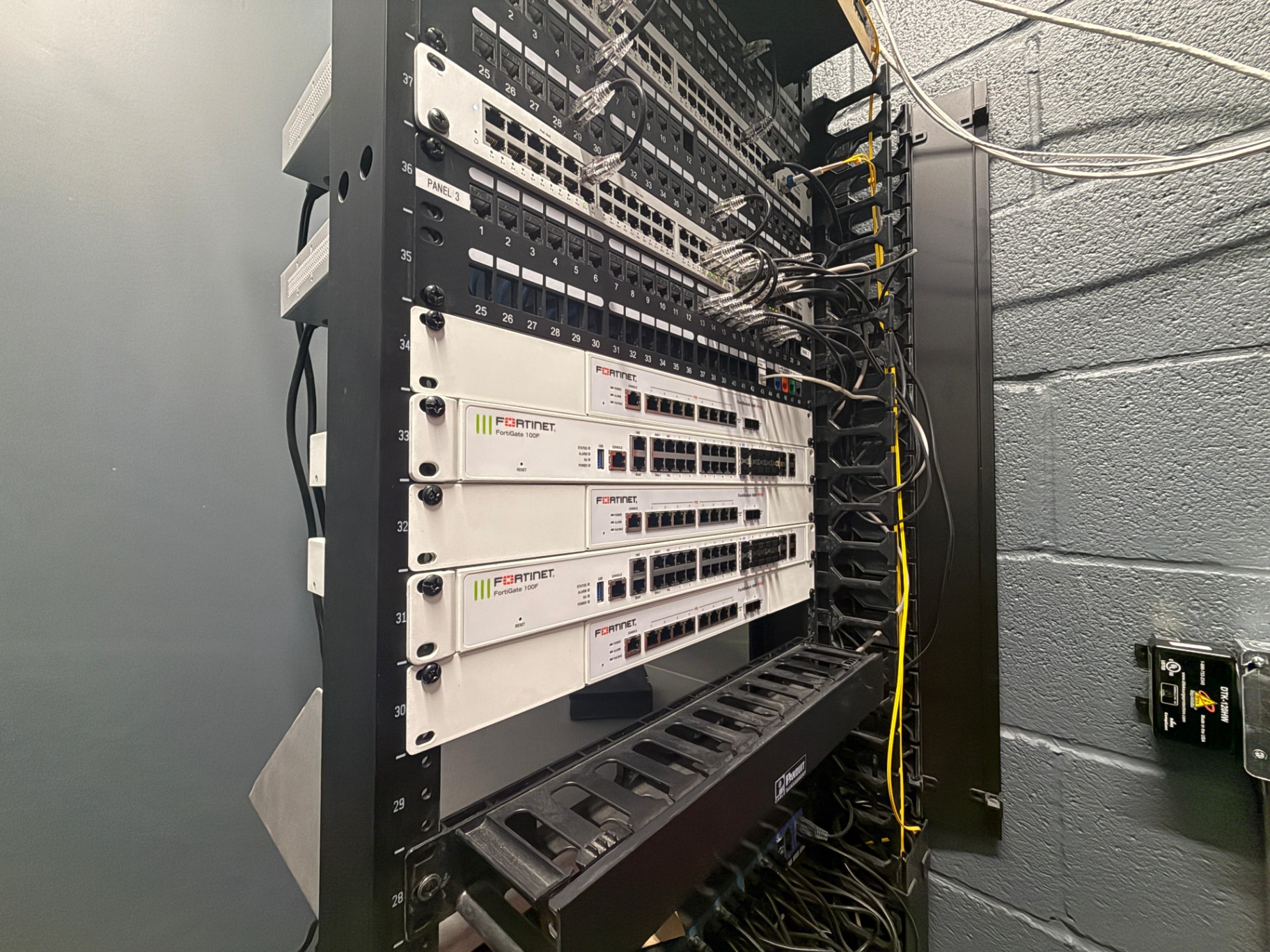
At NJTechland, we assess each site individually and recommend the appropriate cabling based on distance, environment, and your current and future bandwidth needs. Cutting corners on cabling creates bottlenecks that throttle your entire network: even if you're paying for premium internet service.
What Happens When DMARC Extensions Go Wrong
We've walked into countless sites where the previous installer took shortcuts. Here's what bad circuit extensions look like:
- Exposed cables running along baseboards (trip hazards, easily damaged)
- Cat5 cable used for gigabit circuits (instant bottleneck)
- No labeling or documentation (good luck troubleshooting later)
- Cables run through drop ceilings without proper support (sagging, crimping, eventual failure)
- No testing after installation (assuming it works isn't the same as verifying it works)
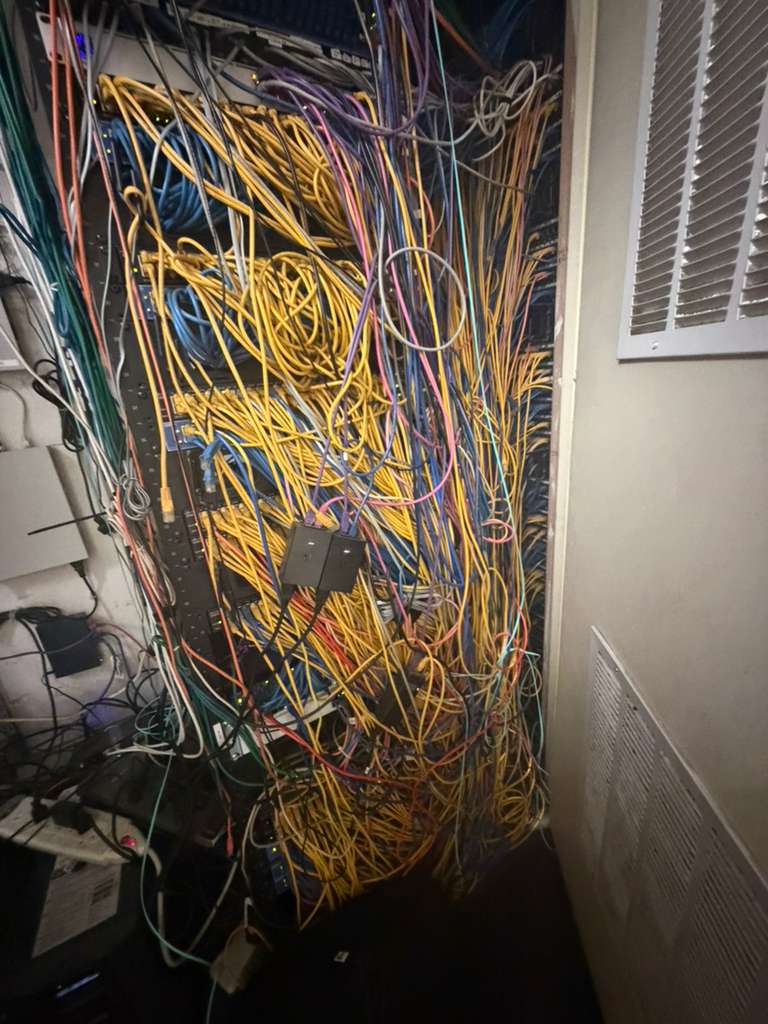
Every one of these issues leads to the same outcome: intermittent connectivity problems that are incredibly difficult to diagnose. Your ISP will say the circuit is fine (because it is: up to the demarc). Your IT team will say the equipment is fine. Meanwhile, your employees can't process transactions, and your security cameras keep dropping offline.
The culprit? A $50 cable run that should have been done properly the first time.
The NJTechland Approach to DMARC Extensions
When NJTechland handles a circuit extension, we follow a strict protocol that ensures reliability and documentation:
1. Site Survey & Path Planning
Before any cable is pulled, we survey the site to identify the optimal pathway. We look for existing conduit, cable trays, and access points. We measure distances and identify potential obstacles or interference sources.
2. Material Selection
Based on the survey, we specify the appropriate cabling: Cat6A for standard runs, fiber for long distances or industrial environments. We don't upsell unnecessarily, but we also don't cut corners.
3. Professional Installation
Our technicians follow structured cabling best practices: proper bend radius, appropriate support intervals, fire-stopping where required, and clean terminations. Every cable is labeled at both ends.
4. Certification Testing
After installation, we test and certify the cable run using professional-grade equipment. You receive documentation proving your extension meets or exceeds industry standards.
5. As-Built Documentation
We provide detailed documentation showing exactly where cables run, how they're terminated, and what equipment they connect. This is invaluable for future troubleshooting or upgrades.
This process applies whether we're extending a single circuit in a local office or coordinating nationwide onsite support for a retail chain with 200 locations. Consistency is what separates professional infrastructure from "it works… mostly."
For a deeper dive into how structured cabling impacts your overall network, check out our guide on Structured Cabling vs. Network Cabling: Which is Better for Your Business Infrastructure?
Industries That Benefit Most from Professional DMARC Extensions
While every business with a dedicated internet circuit can benefit, certain industries see the biggest impact:
Retail Chains
Consistent, reliable connectivity across dozens or hundreds of locations. POS systems, inventory management, and security all depend on that circuit working flawlessly.
Banking & Financial Services
Regulatory compliance requires secure equipment placement. Circuit extensions allow you to terminate in secure rooms while maintaining connection quality.
Healthcare Facilities
Patient data systems, imaging equipment, and telehealth services demand rock-solid connectivity. A poorly extended circuit can mean delayed diagnoses or compliance violations.
Warehouses & Distribution
Large facilities with equipment spread across massive footprints. Fiber-based DMARC extensions ensure consistent performance regardless of distance.
Multi-Tenant Office Buildings
Each tenant might have their own ISP circuit but share common demarc locations. Professional extensions keep everything organized and prevent cross-tenant issues.
We've deployed circuit extensions from Alaska to Minnesota and everywhere in between: always with the same attention to detail and documentation standards.
Ready to Extend Your Circuit the Right Way?
If your ISP recently installed a new circuit: or you're planning an upgrade: don't let a sloppy DMARC extension become the weak link in your infrastructure. NJTechland provides professional circuit extension services backed by structured cabling expertise and nationwide field services capabilities.
Whether you need a single extension at your headquarters or a coordinated rollout across multiple locations, we deliver consistent, documented, and certified results.
Contact NJTechland today to discuss your DMARC extension needs. Visit njtechland.com or reach out directly: we're ready to ensure your infrastructure performs the way it should.
Share your unique link and earn up to 40% commission!
Become our affiliate—tap into unlimited earning potential!