
When you're managing technology infrastructure across multiple locations: whether you're running a retail chain with 50 storefronts or a healthcare network spanning several facilities: choosing the right cabling solution is one of the most critical decisions you'll make. The backbone of your network determines everything from daily operational efficiency to long-term scalability.
The debate between fiber optic cabling and Cat6 cabling isn't new. But for organizations with multi-site infrastructure, the answer is more nuanced than a simple "one size fits all" recommendation. Let's break down exactly what each option brings to the table and help you make the right call for your business.
Understanding the Fundamentals: Fiber Optic vs Cat6
Before diving into the comparison, it's worth understanding what separates these two structured cabling technologies at a fundamental level.
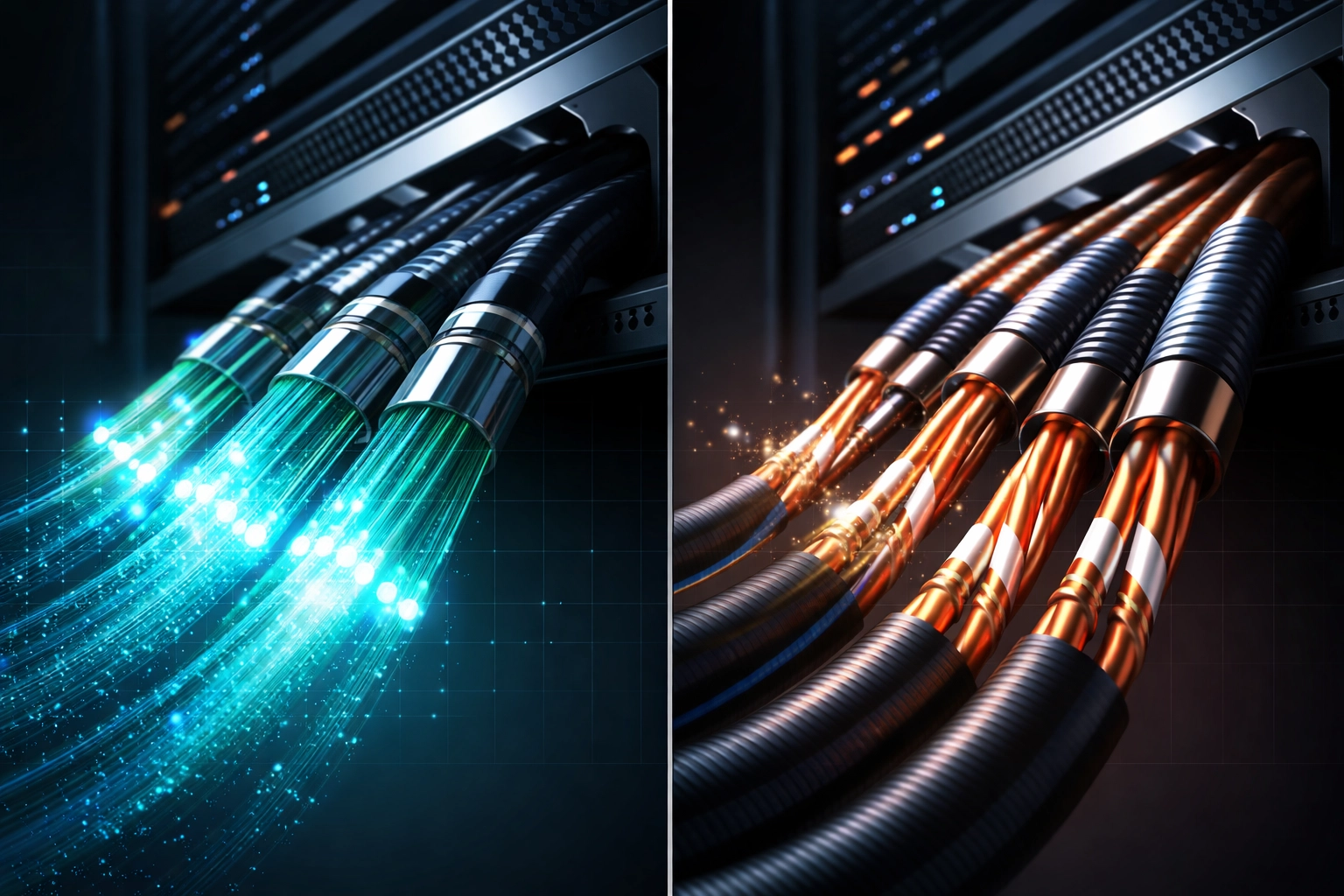
Fiber optic cabling uses thin strands of glass or plastic to transmit data as pulses of light. This technology delivers exceptional speed, reliability, and distance capabilities: making it the gold standard for enterprise-grade network cabling installation.
Cat6 cabling (Category 6) is a copper-based twisted pair cable that transmits data as electrical signals. It's a proven, cost-effective solution that has served businesses well for decades, particularly for in-building network infrastructure.
Both have their place in modern IT environments. The key is knowing when to deploy each one.
Distance Capabilities: The Decisive Factor for Multi-Site Networks
Here's where the conversation gets real for multi-site organizations.
Cat6 cabling maxes out at 100 meters: that's roughly 328 feet. Beyond that distance, you're looking at signal degradation, data loss, and the need for expensive repeaters or signal boosters at every transition point.
Fiber optic cables can transmit data over single-mode distances of up to 180 kilometers at 1 Gbps. That's not a typo: 180 kilometers versus 100 meters.
For businesses managing traffic across geographically dispersed locations, this difference is transformational. A retail chain connecting distribution centers to regional offices, or a healthcare system linking hospitals to satellite clinics, simply cannot rely on Cat6 for site-to-site connectivity.
The bottom line: If your multi-site infrastructure requires connecting buildings or locations separated by more than a football field's length, fiber optic cabling installation is your only practical option.
Speed and Bandwidth: Future-Proofing Your Investment
Today's bandwidth demands are tomorrow's baseline. What feels like overkill now often becomes essential within 3-5 years.
| Specification | Cat6 | Fiber Optic |
|---|---|---|
| Maximum Speed | 10 Gbps | 40-80 Gbps |
| Bandwidth Capacity | 250 MHz | Virtually Unlimited |
| Future Scalability | Limited | Excellent |
Cat6 delivers solid performance for most single-site applications: up to 10 Gbps under optimal conditions. For a single office location with standard business operations, this is often more than sufficient.
Fiber optic supports transmission rates of 40-80 Gbps and beyond. For organizations running bandwidth-intensive applications across multiple sites: video conferencing, cloud-based systems, real-time data analytics, or telemedicine platforms: this headroom is essential.
When you're investing in network cabling installation for multi-site infrastructure, you're not just solving today's problems. You're building the foundation for the next decade of operations.

Reliability and Interference: Keeping Your Network Rock-Solid
Multi-site networks face unique reliability challenges. Signals travel longer distances, pass through more potential interference zones, and connect more critical systems.
Fiber optic cables are immune to electromagnetic interference (EMI). This matters more than most businesses realize. Industrial equipment, HVAC systems, power lines, and even fluorescent lighting can disrupt copper-based cabling. Fiber eliminates this variable entirely.
Cat6, even when shielded, remains susceptible to external electromagnetic interference. In environments like healthcare facilities with MRI machines, retail locations with extensive electronic displays, or any building near industrial equipment, this vulnerability creates real operational risk.
Fiber also delivers lower latency over distances exceeding 100 meters: critical for applications requiring real-time data transmission across your multi-site footprint.
Cost Considerations: The Full Picture
Let's address the elephant in the room: fiber optic cabling has higher upfront costs than Cat6. The cables themselves are more expensive, and fiber optic cabling installation requires specialized equipment and expertise.
But here's what the upfront cost comparison misses:
- Repeater and booster requirements: Cat6 deployments spanning multiple sites require signal amplification equipment: adding ongoing cost and maintenance burden
- Maintenance and repairs: Fiber's immunity to interference means fewer service calls and less troubleshooting
- Longevity: Fiber infrastructure typically outlasts copper by significant margins
- Scalability: Upgrading fiber networks often requires only equipment changes at endpoints, not wholesale cable replacement
For multi-site infrastructure with long-term operational goals, the investment in fiber typically justifies itself through reduced maintenance needs and future-proofing.
For single-site, in-building applications, Cat6 remains a cost-effective, high-performing solution. The key is deploying each technology where it makes strategic sense.
Safety-First Protocols: Our Commitment to Responsible Service Delivery
At NJTechland LLC, we believe safety-first and remote-first protocols aren't just policies: they're non-negotiables for responsible IT service delivery.
Whether we're executing a fiber optic cabling installation or providing 24/7 IT support, we prioritize the wellbeing of our technicians, our clients, and the communities we serve. This means:
- Pre-site assessments to identify potential hazards before any installation begins
- Remote diagnostics and support wherever possible to minimize unnecessary site visits
- Flexible scheduling that accounts for weather, facility conditions, and safety considerations
- Clear communication about timelines and any factors that may affect on-site work
For our NJ/NY operations, scheduling and on-site work are always pending site access and conditions. We don't cut corners on safety: period.

Making the Right Choice for Your Business
So, which cabling solution is right for your multi-site infrastructure? Here's our guidance:
Choose fiber optic cabling when:
- You're connecting locations separated by more than 100 meters
- Your applications demand high bandwidth (40+ Gbps)
- You're operating in environments with significant electromagnetic interference
- You're building infrastructure intended to serve your organization for 10+ years
- Real-time data transmission across sites is business-critical
Choose Cat6 cabling when:
- You're building out network infrastructure within a single building
- Distance requirements stay well under 100 meters
- Budget constraints are significant and bandwidth demands are moderate
- You're supplementing an existing fiber backbone with in-building connectivity
The hybrid approach: fiber for site-to-site connectivity, Cat6 for in-building distribution: often delivers the best balance of performance and cost-effectiveness.
For a deeper dive into how these technologies fit into your overall cabling strategy, check out our guide on structured cabling vs network cabling.
Partner with NJTechland for Your Structured Cabling Needs
Whether you're deploying fiber optic infrastructure across a nationwide retail footprint or upgrading structured cabling in a single healthcare facility, NJTechland LLC delivers end-to-end technology solutions tailored to your specific requirements.
Our nationwide field services mean we can support your multi-site infrastructure wherever your locations are: with consistent quality, transparent communication, and the technical expertise to get the job done right the first time.
Ready to discuss your network cabling installation project? Contact NJTechland today to schedule a consultation and discover how the right cabling infrastructure can transform your multi-site operations.